Leveraging our substantive links to international business as well as professional bodies, the JCU Singapore Business School delivers business learning experiences that contribute to society via our research, consultancy, and graduate outcomes.
We prepare graduates for the challenges of life in the Tropics and beyond. We provide a broad foundation of core skills and knowledge that introduce students to the essentials of business - from relationships between business and society in the Tropics, to understanding consumers, dealing with data, and the roles of communication and sustainability in business. Our research, in particular, has business and societal engagement at its core, and we regularly engage with the private and public sectors internationally.
National Appointment to the Environment & Resources Standards Committee
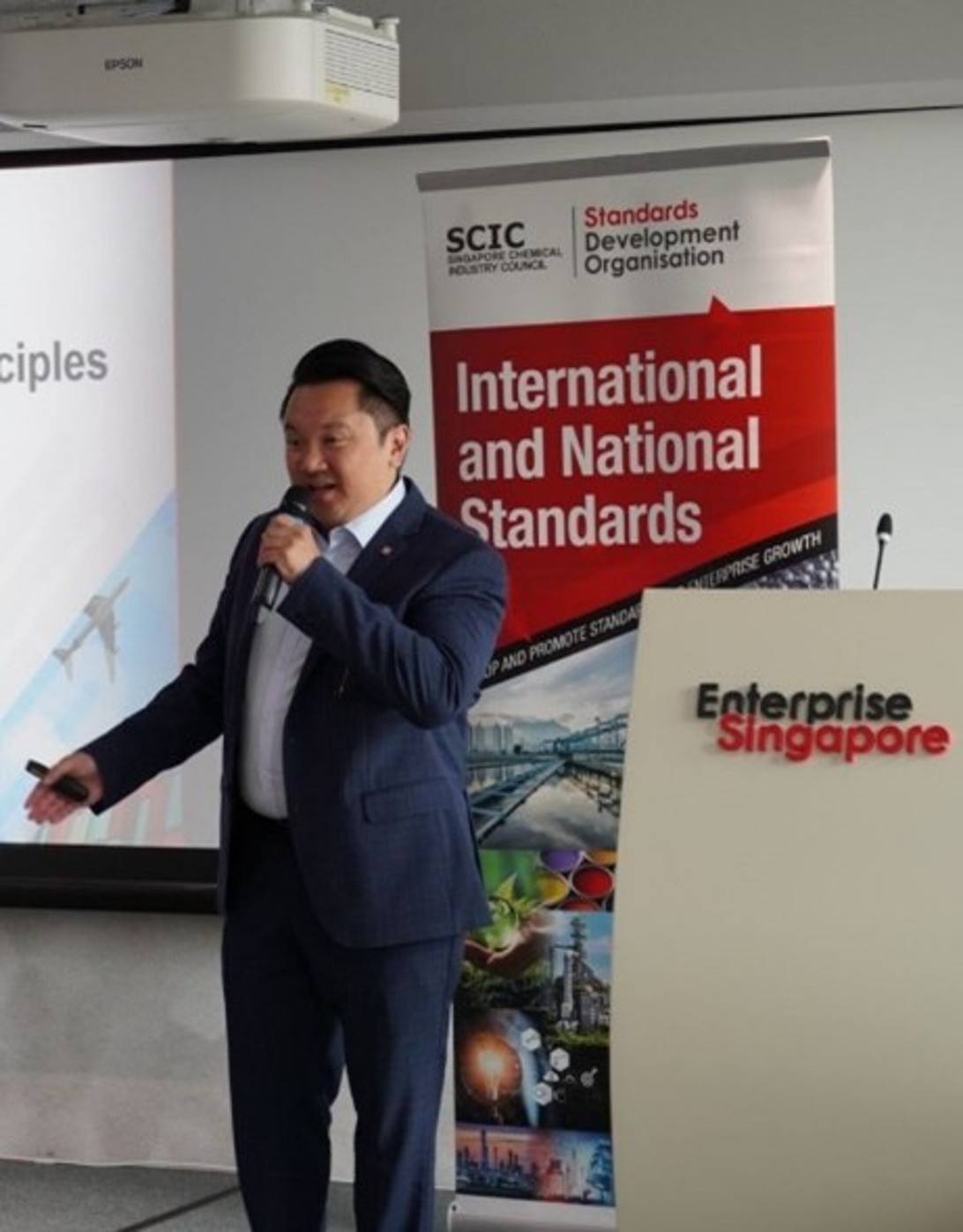
In 2025, Professor Adrian Kuah was re-appointed for a second term to Singapore’s Technical Committee (TC) on Circularity of Materials within the Environment and Resources Standards Committee (ERSC) for another 3 years. This TC oversees several working groups of sustainability technical experts from key organizations around Singapore that are responsible for new standard development, review of standards, and participation in international standardization activities such as the IEC and ISO. Ensuring that Singapore’s business environment achieves world-class outputs and a high standard of productivity requires Singapore and its industries to meet and abide by international standards. Hence, steering Singapore’s participation in international standards development is essential. Professor Kuah’s contributions to the Singapore Standardization Program at Enterprise Singapore foster meaningful connections to leading industry practitioners in Singapore and around the world, and develop competence that drives collective success for the country.
Boardroom Perspectives
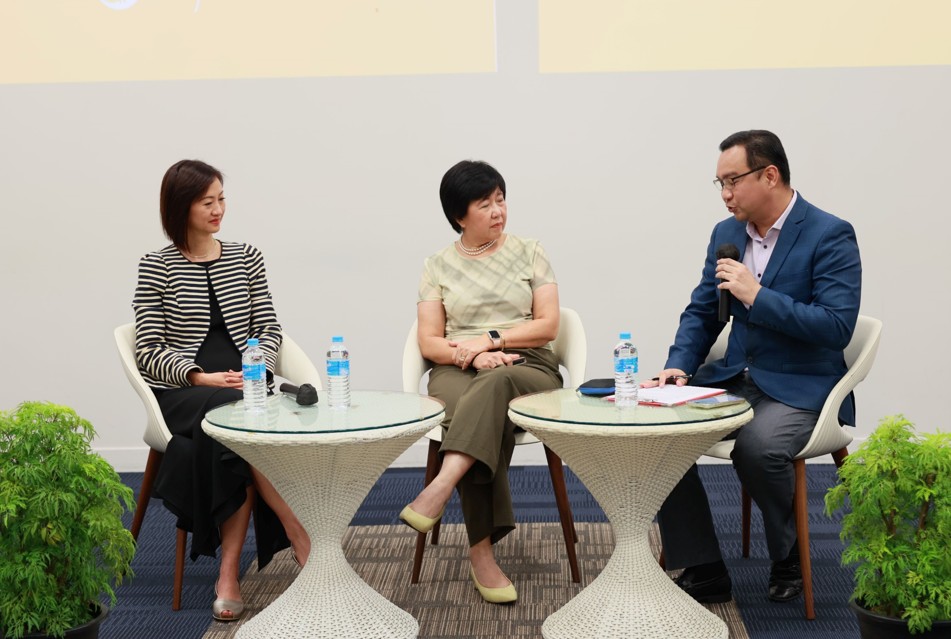
The Boardroom Perspectives, organised by JCUS Business School in collaboration with Singapore Human Resources Institute (SHRI), aims to further add value to the many industry partners of the JCUS Business School. The inaugural event on 10 October 2025 was graced by two senior human resources leaders: Ms Low Peck Kem, President (SHRI) and Chief Human Resources Officer and Advisor (Workforce Development) at the Prime Minister’s Office, and Ms Annie Lim, Head of Human Resources at Lonza. Panellists offer insights on how organisations can better foster collaboration and inclusivity in evolving workplaces. The event welcomes over 100 attendees, comprising industry representatives, alumni, and students.
“In the interplay of longer lives, evolving workforce demographics, and rapid advances in AI, organisations face both a challenge and an opportunity. The panel was a timely reminder that we must redesign work and learning, so every generation stays relevant, connected, and purposeful. Generational diversity isn’t a gap to manage, but a strength to amplify.”
- Ms Yinn Ewe, Chief Human Resources Officer, Hitachi Asia
Launch of AI Playbook to Help Women-Led SMEs Drive Growth & Innovation
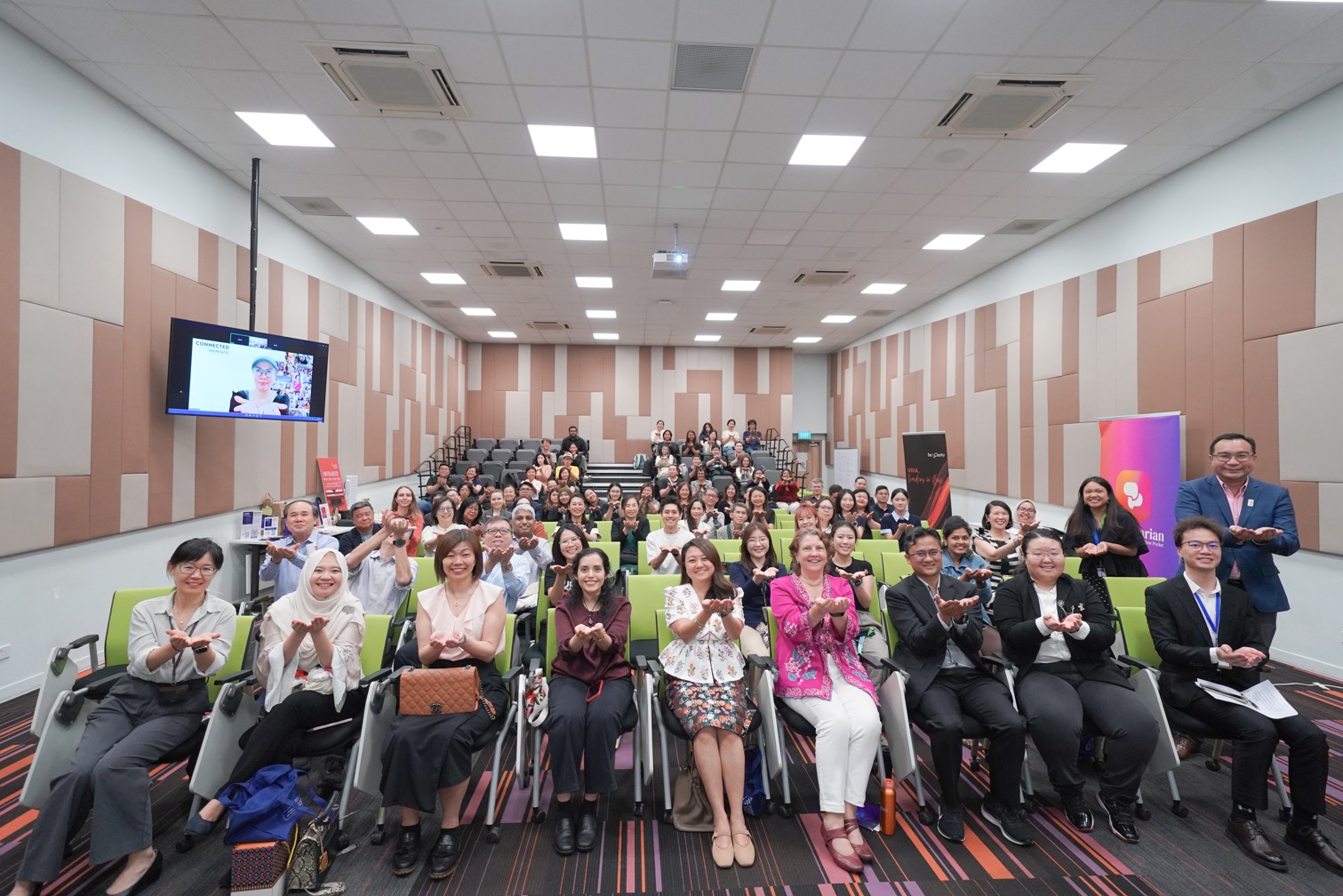
JCUS Business School launched the EMPOWER: AI Playbook for Women Entrepreneurs in Micro, Small and Medium Enterprises at a special event on 18 March 2026, in conjunction with International Women’s Day (IWD). The playbook introduces a structured, practical framework designed to help women-led micro, small, and medium enterprises (MSMEs) adopt artificial intelligence (AI) to strengthen business growth, efficiency and resilience. Developed by researchers from JCUS Business School in collaboration with industry partners, the EMPOWER framework provides a roadmap that combines strategic insight with hands-on approaches that are relevant to small and growing businesses. This playbook is the outcome of a one-year project commissioned by Connected Women (Singapore Chapter) and co-funded by James Cook University’s Centre for International Trade and Business in Asia (CITBA) and DP Dental. The initiative reflects JCU in Singapore’s commitment to applied research, industry engagement and digital capability building. By translating research into practical tools, the University aims to support women entrepreneurs and contribute to stronger and more resilient business ecosystems.