Media Releases
Beyond Compliance: What employers need to get right before Singapore’s Workplace Fairness Act takes effect
Media Releases
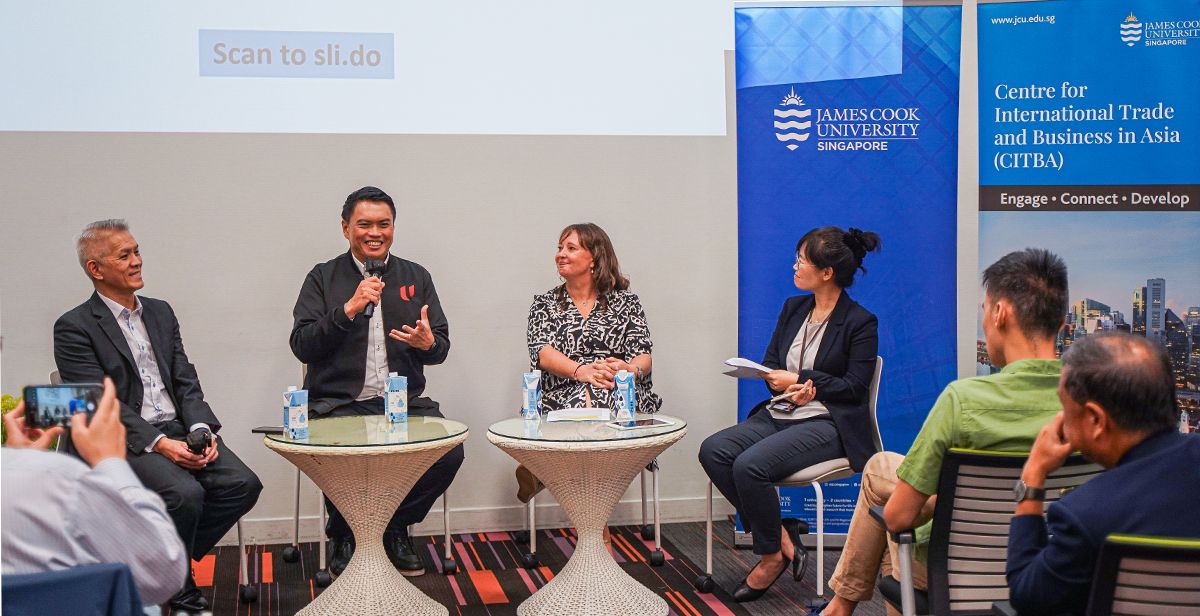
Panel Discussion: With the Workplace Fairness Act due to take effect at the end of 2027, are organisations ready to translate the legislation into practical policies, inclusive leadership and everyday workplace culture?
As Singapore employers prepare for the Workplace Fairness Act, a legal framework to protect employees from workplace discrimination, workplace leaders say readiness will require more than updating human resources (HR) policies. Organisations will also need to strengthen how managers make everyday people decisions, how workplace grievances are handled, and how inclusive practices are embedded into organisational culture.
These issues were explored at the recent The Boardroom Perspective convened by the Singapore Campus of James Cook University’s (JCU) Centre for International Trade and Business in Asia (CITBA) and the Singapore Human Resources Institute (SHRI) with the theme: “Fairness at Work: Are We Ready for an Inclusive Work Environment?”, “CITBA is pleased to partner with SHRI to bring together perspectives from academia and the industry. As a university research centre, we help bridge research and practice, creating platforms like The Boardroom Perspective for different stakeholders to exchange ideas, challenge assumptions and to learn from one another,” said Dr Tan Kim Lim, Head of CITBA Singapore and Senior Lecturer in Business at JCU.
For SHRI, the conversation reinforces the importance of bringing HR professionals and organisational leaders together to shape progressive people practices and more inclusive workplaces. “The Workplace Fairness Act establishes a strong foundation for fair employment practices. From this foundation, organisations should aspire to go beyond compliance by approaching fairness in ways that reflect their ethical principles and organisational values, while navigating trade-offs across business and people considerations with sound judgement. When employees trust that decisions are fair, they are more willing to contribute, speak up and grow with the organisation. HR plays an important role in helping leaders translate these principles into everyday practices. SHRI is pleased to partner with JCU to raise awareness, encourage practical dialogue and help organisations build fairer, more inclusive workplaces,” said Mr Alvin Aloysius Goh, Chief Executive Officer of SHRI.
Perspectives from HR, labour and business
The panel brought together perspectives from the labour movement, HR and business, with Mr Goh joined by:
- Mr Patrick Tay: Assistant Secretary-General of the National Trades Union Congress (NTUC) and Member of Parliament for Pioneer Single Member Constituency;
- Ms Joyce Bijl: Business Development Director, Asia Pacific & Middle East at ManpowerGroup.
Mr Tay brought a labour and policy perspective to the discussion, drawing on his extensive involvement in employment and industrial relations legislation and his work with tripartite partners. “The Workplace Fairness Act sets an important legal baseline for protecting employees and strengthening fair employment practices in Singapore. When it comes into force, it will strengthen protections for workers, including Professionals, Managers and Executives (PMEs) against workplace discrimination on grounds such as age and nationality. With this legislation, Employers, HR professionals and leaders can uphold these principles into fair practices, supportive workplace cultures and meaningful opportunities for employees to contribute and progress. It is an opportunity to build stronger and more inclusive workplaces,” he said.
Ms Bijl brought a business and talent perspective to the discussion, highlighting how inclusive workplace practices can help organisations attract, engage and retain talent. “For employers, workplace fairness is not only about having the right policies in place, but about creating a safe environment where people feel they belong and can contribute. This matters not just for employee experience, but also for an organisation’s ability to attract, retain, and develop talent by enabling employees to reach their full potential in an increasingly competitive workforce. As businesses prepare for the Workplace Fairness Act, leaders have an opportunity to turn inclusive practices into a source of strength and resilience,” she said.
Building more inclusive workplaces
The discussion also highlighted the potential organisational benefits of creating more inclusive workplaces, including stronger employee engagement, innovation and organisational resilience. Rather than viewing diversity and inclusion solely through the lens of compliance, the panellists discussed how organisations can recognise diverse capabilities and create environments where employees are better supported to contribute and thrive.
Through this collaboration, JCU’s CITBA and SHRI aim to provide a platform for leaders, professionals and the wider community to engage with emerging workplace issues and exchange practical perspectives on building future-ready organisations.
“We look forward to continuing to build more meaningful partnerships with like-minded organisations to advance research, dialogue and practice in this ever-changing business environment,” said Dr Tan.
Contacts
Media Enquiries: media-singapore@jcu.edu.au