Media Releases
Hooked on safety: Sustainable foods for those with fish allergies
Media Releases
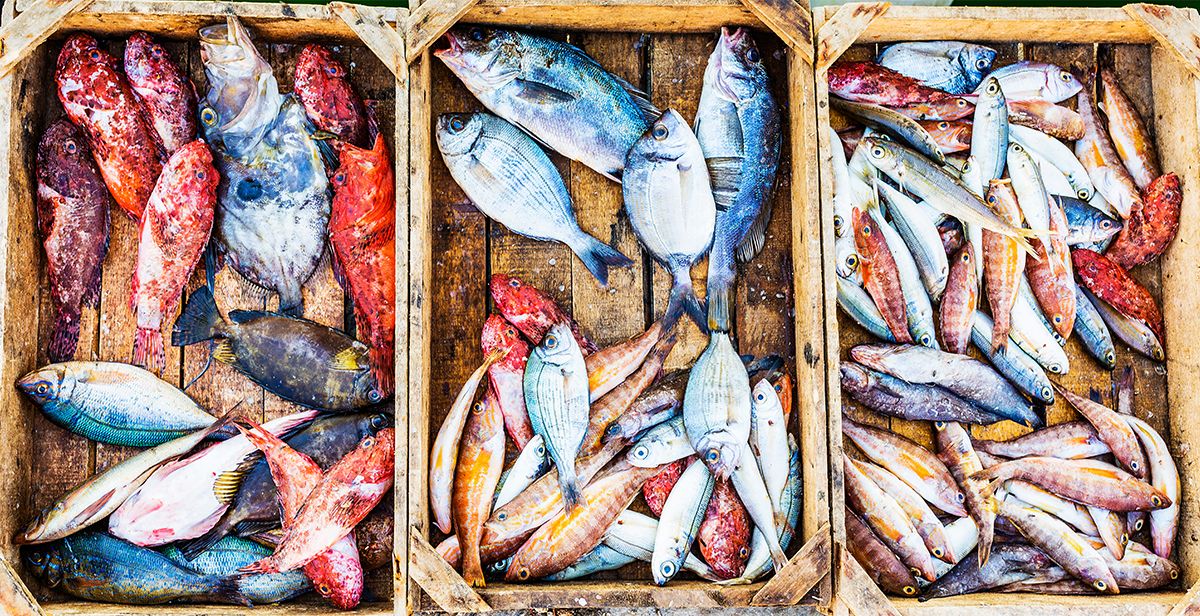
A recent clinical study has found that children with allergies to common bony fish may be able to safely consume gummy shark – one of a very few sustainably fished shark species worldwide. The findings and ongoing research offer hope for allergy sufferers to liberate their diets.
Fish allergy affects approximately 1% of the general population and seafood is a common cause of life-threatening anaphylaxis. However, there’s good news – those allergic to fish may liberate their diets with certain alternatives, according to a recent research study jointly conducted by James Cook University in Singapore and Australia, alongside clinicians from the Epworth Hospital in Melbourne, Australia.
“Many children with fish allergies often end up avoiding all fish species, even though fish-allergic individuals typically demonstrate cross-sensitisation amongst fish families while sometimes showing selective tolerance to fish from different families,” explains Professor Andreas Lopata, Head of Health Sciences at JCU Singapore’s Tropical Futures Institute (TFI) and JCU Australia’s Molecular Allergy Research Laboratory.
“Think about peanut allergies – if you are allergic to peanuts, you are allergic to peanuts, no arguments. However, if you are allergic to fish, you will likely tolerate some species and there is a lot of seafood you can consider. While fish and shellfish (seafood) are one of the most common food allergy triggers and they are also very complex. This is why it is challenging but not impossible to find alternatives though being confident about what’s safe is a major challenge,” adds Dr Thimo Ruethers, Research Fellow at TFI.
In mid-2025, the research team concluded a study where they tested whether children who are allergic to regular fish could safely eat gummy shark. The tests included oral food challenges and skin prick tests.
“We chose gummy shark for the study, which is commonly sold as flake and is often the fish used in fish and chips in certain parts of Australia. The sourcing represents a prime example of sustainable shark fishery, one of only very few globally,” says Dr Ruethers.
Conducted with 21 fish-allergic children, the clinical study was built on a few reports of fish allergy sufferers tolerating some cartilaginous fish species. JCU researchers started evaluating various shark and ray species for their potential allergenicity over 13 years ago and gradually developed the ability to explain and predict these clinical observations. Earlier studies had already suggested that the major allergenic proteins (allergens) in bony fish and cartilaginous fish (sharks and rays) differ considerably at the molecular level, potentially making some shark species, like gummy shark, more tolerable for those with traditional fish allergies. For this cohort of bony fish-allergic children, gummy shark was indeed safe to consume.
Dr Ruethers explains that the allergic response originates from fish proteins being falsely recognised as a threat by an imbalanced immune system. The challenge for us is to predict how an individual’s immune system perceives different fish species and preparations. Clinical trials such as the one we conducted allow us to test our predictions in real-world scenarios and refine them. Today, the team continues to collaborate with clinicians at institutions such as the National University Hospital (NUH) and KK Women’s and Children’s Hospital (KKH) to better diagnose food allergies and mitigate associated safety risks.
“However, we are advising against shark and ray consumption in Singapore,” he clarifies. “There is no sustainable option available! Ongoing research will help us and clinicians to make safe and sustainable dietary recommendations regarding species and preparation methods that will differ among affected consumers based on their individual allergic sensitisation. After all, seafood is very diverse, and there are plenty of fish in the ocean, on fish farms and even in bioreactors when considering emerging cell-cultivated seafood.”
PAPER
Dawes K, Smart J, Ruethers T, Lopata AL, Alhucema P, Campbell DE, Ainsworth J, Simpson B, Baldwin S, Mahoney G, Baumgratner J. Gummy shark is tolerated by children with IgE-mediated fish allergy. The Journal of Allergy and Clinical Immunology: In Practice. doi: 10.1016/j.jaip.2025.05.011.
Learn more about allergy diagnosis, fish product labelling and management challenges, allergens in fish , canned fish, crocodile meat allergy, safe alternatives to fish , and evaluating food safety in sustainable alternative food sources.
Find out more about the Singapore campus of James Cook University.
Learn more about the Tropical Futures Institute (TFI).
Discover further information on areas of research, and research strength at James Cook University in Singapore.
Contacts
Dr Thimo Ruethers thimo.ruethers@jcu.edu.au
Professor Andreas Lopata andreas.lopata@jcu.edu.au
Media: Ms Pinky Sibal pinky.sibal@jcu.edu.au / Ms Hoe Shu Rin shurin.hoe@jcu.edu.au