Media Releases
Allergic to fish? Fish size and parts can matter.
Media Releases
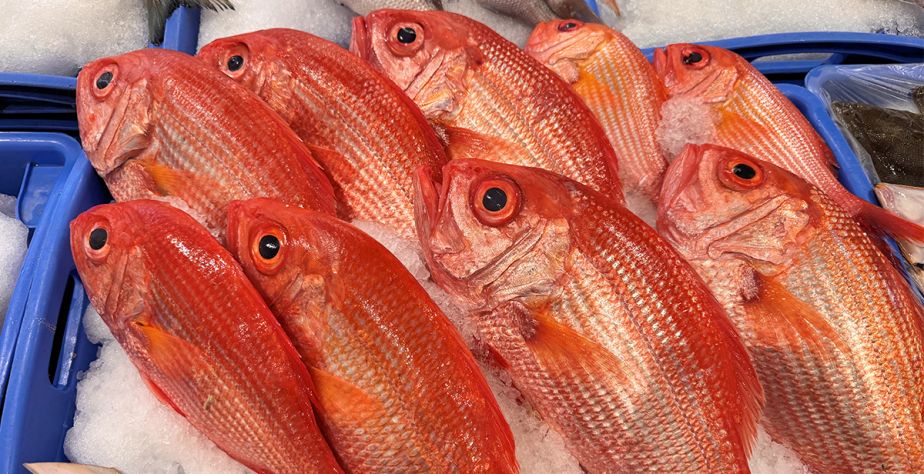
Fish can contain very different levels of allergy-triggering proteins, depending on its size and the part of the body, according to new research from James Cook University.
The study looked at how proteins can vary within a single fish species, the Malabar red snapper. It is a popular and commercially important fish species, which Singapore has been actively breeding as part of efforts to boost food resilience.
The research team identified allergens – proteins in fish that are bound by human Immunoglobulin E (IgE) antibodies, triggering an allergic reaction. It analysed 39 Malabar red snappers (Lutjanus malabaricus) using protein separation, antibody assays and quantitative mass spectrometry to map allergen profiles across fish sizes, body regions and production origins.
”Smaller fish contained more of a major allergenic protein called parvalbumin and creatine kinase, while bigger fish had higher levels of some heat-sensitive allergens,” explained lead researcher Dr Thimo Ruethers from Singapore’s Tropical Futures Institute (TFI) at James Cook University. “Different parts of the body also contained different amounts, with the head having the most parvalbumin, followed by the belly, dorsal, and tail. Strikingly, it doesn’t seem to matter if the fish is farmed or wild-caught. People allergic to fish can experience a range of symptoms from mild (hives, stomach upset, swelling) to severe, life-threatening anaphylaxis, including breathing difficulties after exposure through ingestion or even just skin contact or inhaling cooking vapours.”
“Our findings show that allergen levels can vary widely within the same species, and understanding this can support more accurate food allergy diagnostics and food safety strategies. This in turn will help improve food safety and allergy management for individuals who are allergic to fish”, explained Professor Andreas Lopata, Head of Health Sciences at TFI and JCU Australia’s Molecular Allergy Research Laboratory.
“From a food safety perspective, these findings suggest that risk assessments and risk mitigation strategies for allergic consumers should consider fish size in addition to body region and species,” he added.
“Altogether, we are supporting accurate diagnosis for affected fish-allergic consumers and help the food industry to lower allergy risks while promoting liberal, safe and healthy diets,” Dr Ruethers summarised.
These findings build on the team’s previous research on sustainable fish feed, allergy test drawbacks, safe alternatives for fish-allergic individuals, canned fish, and allergy risks from crocodile meat.
PAPER
Ruethers T, Sean A, Karnaneedi S, Chin R, Leeming MG, Nguyen V, Huerlimann R, Nugraha R, Bade P, Vij S, Shen X, Limviphuvadh V, Williamson NA, Domingos JA, Jerry DR, Maurer-Stroh S, Andiappan AK, Lopata AL. Fish size matters – Variable food allergen profiles in farmed and wild Malabar red snapper (Lutjanus malabaricus). Food Chemistry (2026). doi: 10.1016/j.foodchem.2026.147950.
Discover further information on areas of research, and research strength at James Cook University in Singapore.Learn more about the Tropical Futures Institute (TFI).
Find out more about the Singapore campus of James Cook University.
Contacts
Dr Thimo Ruethers thimo.ruethers@jcu.edu.au
Professor Andreas Lopata andreas.lopata@jcu.edu.au
Media: Ms Pinky Sibal pinky.sibal@jcu.edu.au / Ms Hoe Shu Rin shurin.hoe@jcu.edu.au